Woodworm infestations are among the most challenging timber problems because the insects spend most of their lives hidden deep inside wood. By the time homeowners notice small exit holes or fine wood dust, the larvae may have already been feeding beneath the surface for several years. This hidden behavior is one reason why choosing the right treatment method is so important.
Chemical woodworm treatments have been used successfully for decades and remain an important option in many situations. However, surface-applied pesticides have practical limitations when it comes to penetrating deep into timber, especially if the wood is dense, coated, or heavily infested. Understanding these limitations helps explain why professional assessment is essential and why heat-based technologies, such as microwave woodworm treatment, are increasingly being considered for certain applications.
In this guide, we’ll explore how woodworm lives inside timber, how chemical treatments work, what affects their penetration, and why some infestations may require alternative treatment methods.
Understanding Woodworm
Despite the name, woodworm is not actually a worm. It is the larval stage of several species of wood-boring beetles, including:
- Common Furniture Beetle (Anobium punctatum)
- Deathwatch Beetle (Xestobium rufovillosum)
- House Longhorn Beetle (Hylotrupes bajulus)
- Powderpost Beetles (Lyctus species)
Adult beetles lay eggs in cracks, joints, and exposed timber. After hatching, the larvae tunnel through the wood while feeding on cellulose.
Depending on the species and environmental conditions, larvae may remain hidden inside timber for two to five years, and sometimes much longer.
How Chemical Woodworm Treatments Work
Professional chemical treatments use specially formulated insecticides or preservatives that are applied to timber by:
- Brushing
- Spraying
- Injection (where appropriate)
- Pressure treatment for certain timber before installation
The active ingredients are designed to move into the timber and affect insects that come into contact with treated wood or consume it.
When selected and applied correctly, these treatments can be highly effective for many woodworm infestations.
Why Penetration Matters
The success of any treatment depends on reaching the insects.
Because woodworm larvae live inside narrow tunnels beneath the timber surface, treatment effectiveness depends on whether sufficient active ingredients reach the areas where the insects are located.
The deeper the larvae are inside the wood, the more challenging treatment can become.
Factors That Limit Pesticide Penetration
Surface-applied woodworm treatments do not behave the same way in every type of timber.
Several factors influence how deeply a treatment can penetrate.
1. Timber Density
Dense hardwoods generally allow less movement of liquid preservatives than more porous softwoods.
This means penetration may vary depending on the wood species being treated.
2. Surface Coatings
Paint, varnish, wax, or sealants can reduce the ability of surface-applied products to enter the timber.
Professionals often assess whether coatings need to be removed or whether another treatment method is more suitable.
3. Moisture Content
The moisture level of the timber can influence how preservatives are absorbed and distributed.
Very dry or very wet timber may behave differently during treatment.
4. Depth of the Infestation
Woodworm larvae may tunnel several millimeters—or much deeper—below the surface.
If insects are located far inside thick structural beams, treatment planning becomes especially important.
5. Timber Condition
Cracks, decay, previous repairs, and natural variations in the wood can all affect how preservatives move through the timber.
Why Professional Assessment Is Important
A professional timber preservation specialist evaluates several factors before recommending treatment, including:
- Beetle species
- Extent of infestation
- Timber thickness
- Accessibility
- Moisture levels
- Structural condition
- Existing finishes
This assessment helps determine whether a chemical treatment, a heat-based method, or another approach is most appropriate.
How Microwave Treatment Differs
Microwave woodworm treatment works in a fundamentally different way.
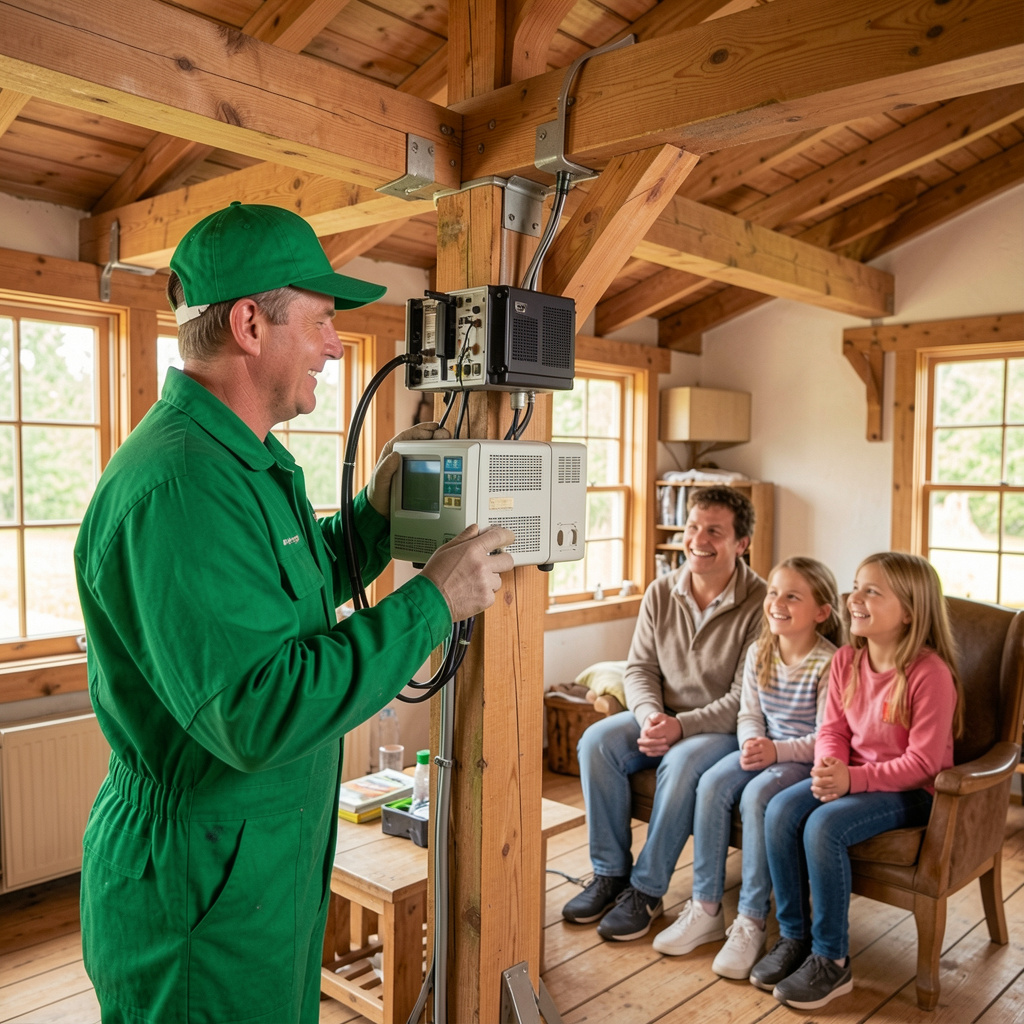
Instead of relying on chemicals moving through the wood, professional microwave equipment generates controlled heat inside the timber through a process known as dielectric heating.
Microwave energy interacts with naturally occurring water molecules inside the wood, producing heat throughout the targeted section.
When the timber reaches approximately 55–60°C (131–140°F) for an appropriate period, the heat is intended to eliminate:
- Woodworm larvae
- Beetle eggs
- Pupae
- Adult beetles
Because the heat is generated within the timber itself, microwave treatment does not depend on chemical penetration.
Chemical Treatment vs. Microwave Treatment
| Feature | Microwave Treatment | Chemical Treatment |
|---|---|---|
| Uses Pesticides | No | Yes |
| Leaves Chemical Residue | No | Usually yes |
| Uses Heat | Yes | No |
| Depends on Surface Absorption | No | Yes |
| Suitable for Localized Treatment | Excellent | Good |
| Residual Protection | No | Often available |
Both methods have strengths, and the best choice depends on the property, timber condition, and infestation.
Does Poor Penetration Mean Chemical Treatments Don’t Work?
No.
Professional chemical woodworm treatments remain an effective solution for many infestations when:
- The correct product is selected.
- The treatment is professionally applied.
- The timber is suitable for the chosen method.
- The infestation is properly assessed.
However, no single treatment method is ideal for every situation. The location of the infestation, the type of timber, and the condition of the structure all influence the most appropriate approach.
Benefits of Microwave Treatment
Many property owners choose microwave treatment because it offers:
Chemical-Free Operation
No insecticides are applied to the timber.
No Chemical Residues
The treated wood remains free from pesticide residues.
Targeted Heating
Specific infested areas can be treated without applying chemicals throughout the property.
Environmentally Friendly
Microwave treatment reduces reliance on synthetic pesticides.
Suitable for Heritage Buildings
It is often considered for:
- Historic buildings
- Museums
- Churches
- Antique furniture
- Listed properties
where preserving original timber is important.
Preventing Future Woodworm Problems
Regardless of the treatment method, prevention is essential.
Protect your timber by:
- Repairing roof leaks promptly.
- Improving ventilation.
- Keeping structural timber dry.
- Reducing indoor humidity.
- Inspecting roof spaces annually.
- Monitoring furniture for fresh frass and exit holes.
- Addressing damp conditions quickly.
Healthy, dry timber is naturally less attractive to wood-boring beetles.
Common Myths About Pesticide Penetration
Myth 1: More Chemical Always Means Better Protection
Fact: Effectiveness depends on using the right product, applying it correctly, and selecting a treatment appropriate for the infestation.
Myth 2: Every Wood Species Absorbs Chemicals the Same Way
Fact: Different timber species vary in density, porosity, and moisture content, all of which influence how treatments behave.
Myth 3: Heat Treatments Replace Every Chemical Treatment
Fact: Heat-based and chemical treatments each have advantages. Professionals choose the most appropriate method based on the specific circumstances.
When Should You Contact a Professional?
Professional advice is recommended if:
- Fresh frass continues appearing.
- New exit holes develop each season.
- Structural timber is affected.
- Valuable furniture is infested.
- You’re comparing chemical and microwave treatment options.
- You’re unsure whether the infestation is active.
A qualified timber preservation specialist can inspect your property, identify the extent of the infestation, and recommend the most effective treatment strategy.
Conclusion
Surface-applied chemical woodworm treatments remain an important and effective tool for protecting timber, but their performance depends on factors such as wood species, moisture content, surface coatings, and the depth of the infestation. Because woodworm larvae often live deep inside structural timber, treatment planning requires careful assessment to ensure the chosen method is appropriate.
Microwave woodworm treatment offers a different approach by generating controlled heat inside the timber rather than relying on chemical penetration. Both methods have valuable roles in modern timber preservation, and the best choice depends on the condition of the wood, the extent of the infestation, and professional evaluation. Combined with regular inspections, moisture control, and preventive maintenance, either approach can help protect timber from long-term woodworm damage.Visit online https://www.shashel.eu for more details .